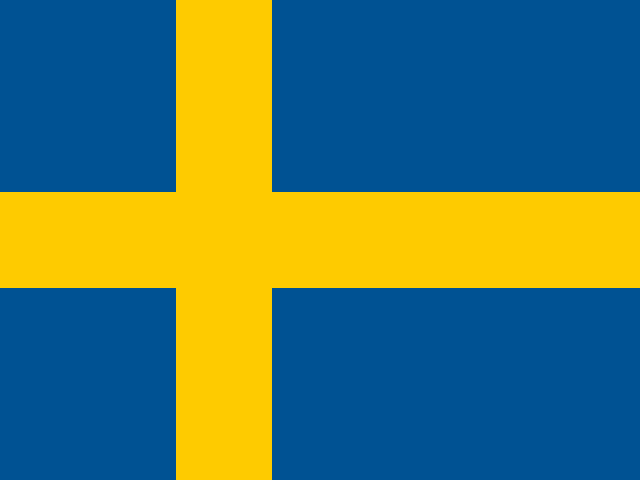
 Complete Guide for 2026
Working in Sweden
Sweden is one of the most attractive countries in Europe for professionals, known for its excellent quality of life, strong social safety net, and innovative economy. The country is home to global companies like Spotify, IKEA, Ericsson, and Volvo, and has a thriving startup ecosystem. With high English proficiency, progressive work culture, and generous employee benefits, Sweden draws talent across technology, life sciences, and engineering sectors.
Salary Statistics in Sweden
Understanding salary ranges helps you negotiate better and set realistic expectations
Average Salary
SEK 477,600
per year
Median Salary
SEK 420,000
per year
Minimum Wage
N/A
per year
Top 10% Earn
SEK 720,000+
per year
Salary Distribution
Work Culture in Sweden
Swedish work culture is built on consensus, equality, and work-life balance. The concept of "lagom" (just the right amount) permeates the workplace, discouraging overwork and promoting balance. "Fika" (coffee breaks) are a cherished tradition that encourages social connection. Flat hierarchies, open communication, and trust-based management are hallmarks of Swedish offices. Flexible working arrangements and generous parental leave are standard.
Work Conditions
What to expect from employment benefits and legal requirements
Work Week
40 hours
Standard working hours
Annual Leave
25 days minimum (by law)
Paid vacation days
Public Holidays
13 days
National holidays per year
Sick Leave
Day 1 unpaid (karensdag), days 2-14 at 80% from employer, then Forsäkringskassan at 80%
Paid sick leave coverage
Maternity Leave
480 days shared parental leave at 80% salary (capped)
Paid leave for mothers
Paternity Leave
480 days shared (90 days reserved per parent)
Paid leave for fathers
Work Conditions Overview
Pros & Cons for Expats
What international workers should consider before relocating
Advantages
Excellent Work-Life Balance
Strong labor laws, 25 days minimum vacation, generous parental leave, and fika culture.
Innovation Hub
Home to Spotify, Klarna, IKEA, and a world-leading startup ecosystem (Stockholm is Europe's unicorn factory).
Strong Social Safety Net
Comprehensive healthcare, education, unemployment insurance, and pension system.
High English Proficiency
One of the highest English proficiency rates in the world - easy to work without Swedish initially.
Gender Equality
World leader in gender equality with shared parental leave and equal opportunity policies.
Challenges
High Tax Rates
Combined municipal and state tax can reach over 50% for high earners.
High Cost of Living
Especially in Stockholm - housing is expensive and finding rental apartments is notoriously difficult.
Dark Winters
Very short daylight hours in winter (as little as 6 hours in Stockholm, less in the north).
Housing Shortage
Major cities, especially Stockholm, have severe housing shortages with long queue times for rental contracts.
Reserved Culture
Swedes can be perceived as reserved and it may take time to build social connections.
Tax System Highlights
Key things to know about taxation in Sweden
- Municipal tax averages 32.38% on all taxable income
- State tax of 20% applies above SEK 643,000
- Generous jobbskatteavdrag (earned income tax credit) reduces effective rate
- 7% pension contribution fully offset by tax credit
- No statutory minimum wage - wages set by collective agreements
Popular Cities for Expats
Top destinations for international professionals in Sweden
Frequently Asked Questions
Compare Sweden with Other Countries
See how Sweden stacks up against other European countries for salaries, taxes, and work-life balance
vs
Sweden vs Netherlands
Compare salaries, taxes & work conditions
vs
Sweden vs Germany
Compare salaries, taxes & work conditions
vs
Sweden vs France
Compare salaries, taxes & work conditions
vs
Sweden vs Spain
Compare salaries, taxes & work conditions
vs
Sweden vs Italy
Compare salaries, taxes & work conditions
vs
Sweden vs Belgium
Compare salaries, taxes & work conditions
vs
Sweden vs Austria
Compare salaries, taxes & work conditions
vs
Sweden vs Poland
Compare salaries, taxes & work conditions
vs
Sweden vs Switzerland
Compare salaries, taxes & work conditions
vs
Sweden vs Denmark
Compare salaries, taxes & work conditions
vs
Sweden vs Norway
Compare salaries, taxes & work conditions
vs
Sweden vs Finland
Compare salaries, taxes & work conditions
vs
Sweden vs Ireland
Compare salaries, taxes & work conditions
vs
Sweden vs Portugal
Compare salaries, taxes & work conditions
vs
Sweden vs Greece
Compare salaries, taxes & work conditions
Ready to Calculate Your Salary?
Use our free calculator to see exactly how much you'll take home after taxes and deductions in Sweden.
Open Salary Calculator