 Complete Guide for 2026
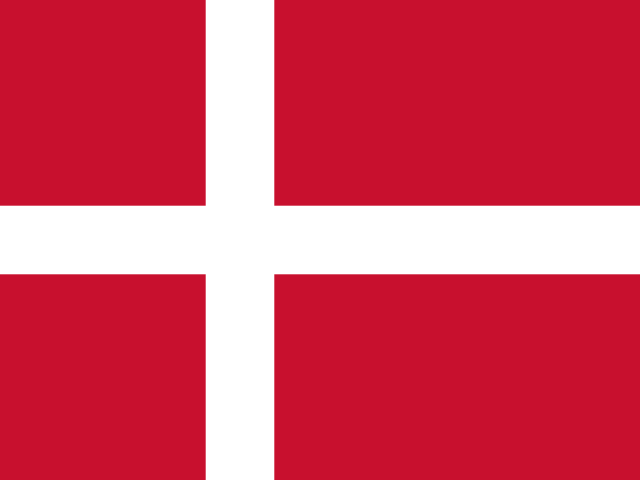
Working in Denmark
Denmark consistently ranks among the happiest and most prosperous countries in the world. Known for its strong welfare state, excellent work-life balance, and highly competitive salaries, Denmark offers a remarkable quality of life for workers. The Danish economy is driven by pharmaceuticals, clean energy, maritime shipping, IT, and design. Copenhagen is an emerging European tech hub, and the country's flexicurity model provides both labor market flexibility and a strong social safety net.
Salary Statistics in Denmark
Understanding salary ranges helps you negotiate better and set realistic expectations
Average Salary
DKK 552,000
per year
Median Salary
DKK 480,000
per year
Minimum Wage
N/A
per year
Top 10% Earn
DKK 750,000+
per year
Salary Distribution
Work Culture in Denmark
Danish work culture is famously flat and egalitarian. Hierarchy is minimal, first names are used universally, and employees are expected to take initiative. The concept of "hygge" extends to the workplace with a focus on collaboration and well-being. Meetings are efficient, work hours are respected, and overtime is rare. Denmark pioneered flexible working arrangements long before the pandemic, and trust-based management is the norm.
Work Conditions
What to expect from employment benefits and legal requirements
Work Week
37 hours
Standard working hours
Annual Leave
25 days (5 weeks)
Paid vacation days
Public Holidays
11 days
National holidays per year
Sick Leave
Up to 30 days paid by employer, then municipality covers
Paid sick leave coverage
Maternity Leave
18 weeks at full salary (many CBAs offer more)
Paid leave for mothers
Paternity Leave
2 weeks at full salary + 32 weeks shared parental leave
Paid leave for fathers
Work Conditions Overview
Pros & Cons for Expats
What international workers should consider before relocating
Advantages
Excellent Work-Life Balance
37-hour work week, 5+ weeks holiday, and a culture that truly respects personal time.
High Salaries
Among the highest in Europe, especially in pharma, tech, and maritime sectors.
Strong Social Safety Net
Free healthcare, education, generous unemployment benefits, and pension system.
Flat Workplace Culture
Minimal hierarchy, open communication, and employee autonomy are the norm.
Flexicurity Model
Easy to hire and fire, but strong unemployment protection ensures worker security.
Challenges
High Tax Rates
Combined marginal tax rate can reach 52%+ for higher earners. AM-bidrag (8%) applies to all.
High Cost of Living
Housing in Copenhagen is expensive, and groceries and dining out cost more than EU average.
Language Barrier
While most Danes speak excellent English, Danish is needed for many public sector and local roles.
Cold Dark Winters
Only 7 hours of daylight in December. Long, grey winters can be challenging for newcomers.
Difficult Social Integration
Danish social circles can be hard to break into. Building friendships takes time and effort.
Tax System Highlights
Key things to know about taxation in Denmark
- AM-bidrag (labour market contribution) of 8% on all income
- Bundskat (state tax) at 12.01% + municipal tax averaging 25.05%
- NEW 2026: Mellemskat (7.5%) on income above DKK 641,200
- Topskat (7.5%) on income above DKK 777,900
- NEW 2026: Toptopskat (5%) on income above DKK 2,592,700
Popular Cities for Expats
Top destinations for international professionals in Denmark
Frequently Asked Questions
Compare Denmark with Other Countries
See how Denmark stacks up against other European countries for salaries, taxes, and work-life balance
vs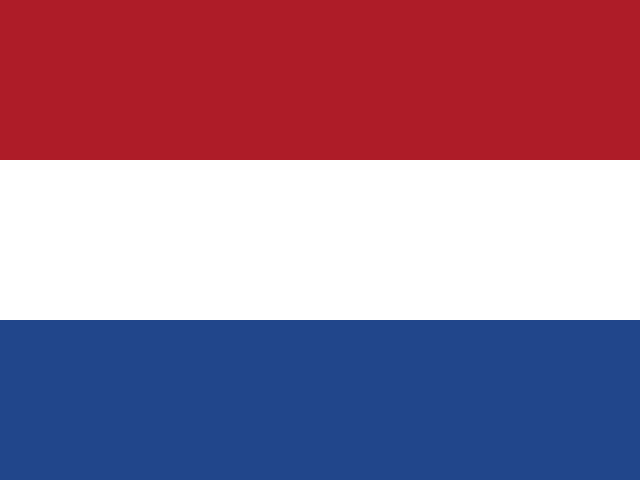
Denmark vs Netherlands
Compare salaries, taxes & work conditions
vs
Denmark vs Germany
Compare salaries, taxes & work conditions
vs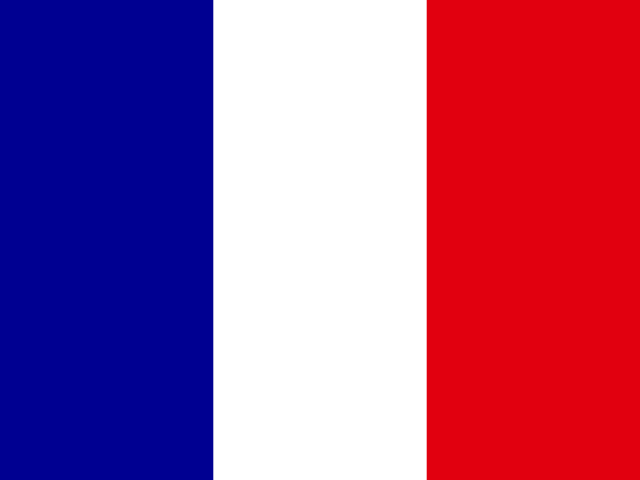
Denmark vs France
Compare salaries, taxes & work conditions
vs
Denmark vs Spain
Compare salaries, taxes & work conditions
vs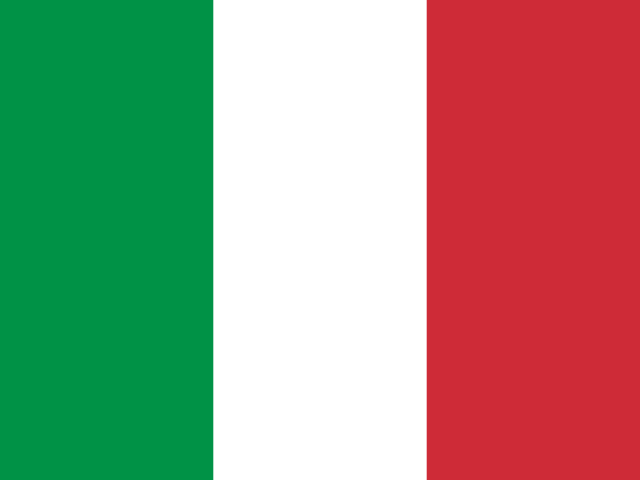
Denmark vs Italy
Compare salaries, taxes & work conditions
vs
Denmark vs Belgium
Compare salaries, taxes & work conditions
vs
Denmark vs Austria
Compare salaries, taxes & work conditions
vs
Denmark vs Poland
Compare salaries, taxes & work conditions
vs
Denmark vs Switzerland
Compare salaries, taxes & work conditions
vs
Denmark vs Sweden
Compare salaries, taxes & work conditions
vs
Denmark vs Norway
Compare salaries, taxes & work conditions
vs
Denmark vs Finland
Compare salaries, taxes & work conditions
vs
Denmark vs Ireland
Compare salaries, taxes & work conditions
vs
Denmark vs Portugal
Compare salaries, taxes & work conditions
vs
Denmark vs Greece
Compare salaries, taxes & work conditions
Ready to Calculate Your Salary?
Use our free calculator to see exactly how much you'll take home after taxes and deductions in Denmark.
Open Salary Calculator